
Searching DeKalb County Cases by Name
Name searching works when you lack the exact number. First pick the right court class. DeKalb Superior Court holds felonies, family matters, divorces, title and real-property disputes, and the biggest civil cases. DeKalb State Court Division A takes misdemeanors and its civil docket. Ordinary county traffic lands in Division B or with the issuing city. Warrants, small civil claims, and ordinance cases often sit in DeKalb Magistrate Court. Juvenile and Probate searches run through their own offices. Spell the name exactly as the DeKalb notice does. Then narrow by court or case type if the form allows.
Treat a name match as a pointer, not the whole case file. Write down the court, the party role, the case type, and any date range you used. That note earns its keep in two spots. A common name can return many rows. A case may also have moved from a DeKalb municipal court into a county court.
- Identify the issuing court and choose its linked public search or calendar route.
- Enter the last name and first name as shown on the official notice or filing.
- Add a court, case type, division, or date filter when the form offers one.
- Open the matching event, then save the case number, court, status, and next setting.
DeKalb County Case Search in Odyssey
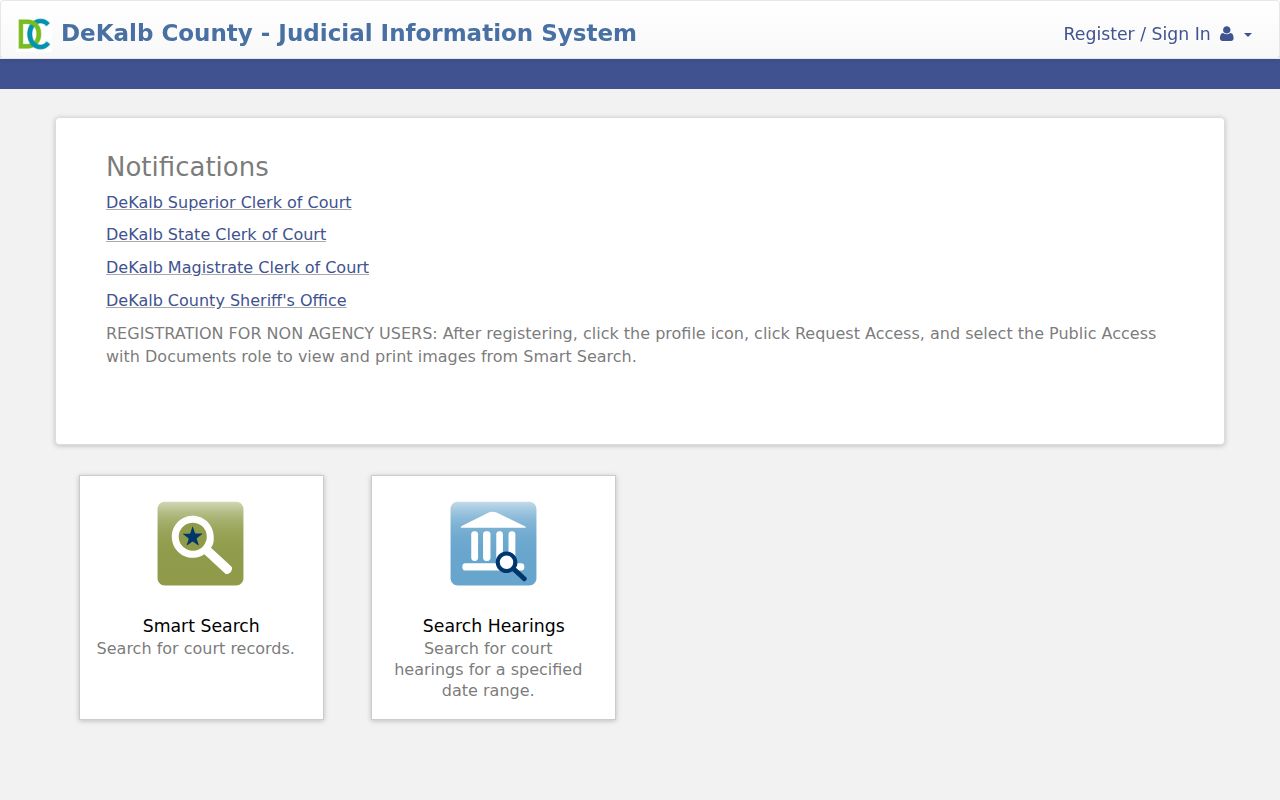
DeKalb Odyssey is the practical route. It covers Superior Court, State Court Division A, and many Magistrate event searches. Its landing page splits into Smart Search and Search Hearings. Smart Search builds its detailed controls only after JavaScript and cookies are enabled. A static description cannot promise partial-match or wildcard behavior the public form does not show. Search Hearings is the date-oriented route for settings.
You can view case events without an account. Document images are different. They need a registered public-access role. Register as a non-agency user, open Profile, and choose Request Access. Select Public Access with Documents. DeKalb clerk material says the first page may be free, with document viewing or purchase listed at $0.50 per page. One caution. An account gate on a document does not mean the case is sealed.
The DeKalb Odyssey Smart Search landing view shows both DeKalb County entry points along with the access notice.
Use the event layer to find the matter. Then follow the DeKalb clerk's document route for a filed image or a certified copy.
Searching by Case Number
An exact case number is the cleanest DeKalb County case search. Keep the year, case-type code, and sequence together. DeKalb State Court Division B publishes the example 2005 TR 000123. The year comes first. Then the traffic code. Then a six-digit number. That pattern belongs to State B, not to every Superior or municipal matter.
A Superior criminal record may show a D-number before an indictment or accusation and judge assignment. A citation number belongs to the issuing court. A city case number belongs to that municipal host. If the system rejects a number, do not fiddle with its spacing. Reread the notice, confirm the court, and try the official search route that court names.
DeKalb County Case Search Fields
The DeKalb State Court Division B Benchmark form offers more identifier choices. Odyssey's landing page has fewer. Pick one main radio identifier and enter its value. Add date, court, party, division, or charge filters only when they help. The form has a registration path, but that is separate from the DeKalb County document-access gate.
| Field or control | Observed format | Use |
|---|---|---|
| All | Radio choice | Broad search across the available State B fields. |
| Name | Last, First | Enter the name in the form's stated order. |
| Case Number | Year, type, six-digit number | Example: 2005 TR 000123. |
| Citation Number | Text value | Use the number printed on the citation. |
| Citation Vehicle Tag Number | Text value | Searches outstanding or not-closed cases tied to the tag. |
| Drivers License Number | Text value | Use only inside the public court form when appropriate. |
| Date Opened From / To | Date fields | Narrow by the opening date range. |
| Date Closed From / To | Date fields | Narrow by the closing date range. |
| Party Birth Year | Four-digit year | Use as a narrowing field, not as a substitute for identity. |
| Court Types | Multi-select | Includes traffic, State Court, parking, code, and other listed types. |
| Causes of Action or Case Types | Multi-select | Choose a listed cause or traffic-related type. |
| Party Types | Multi-select | Includes plaintiff, defendant, judge, attorney, and alias options. |
| Divisions | Multi-select | Includes current and legacy division labels. |
| Statutes or Charges | Typeahead and Add | Enter at least three characters before adding a selected charge. |
| Search | Button | Submit the chosen identifier and filters. |
The DeKalb State B Benchmark search screen helps when a traffic or Division B identifier will not fit an Odyssey search.
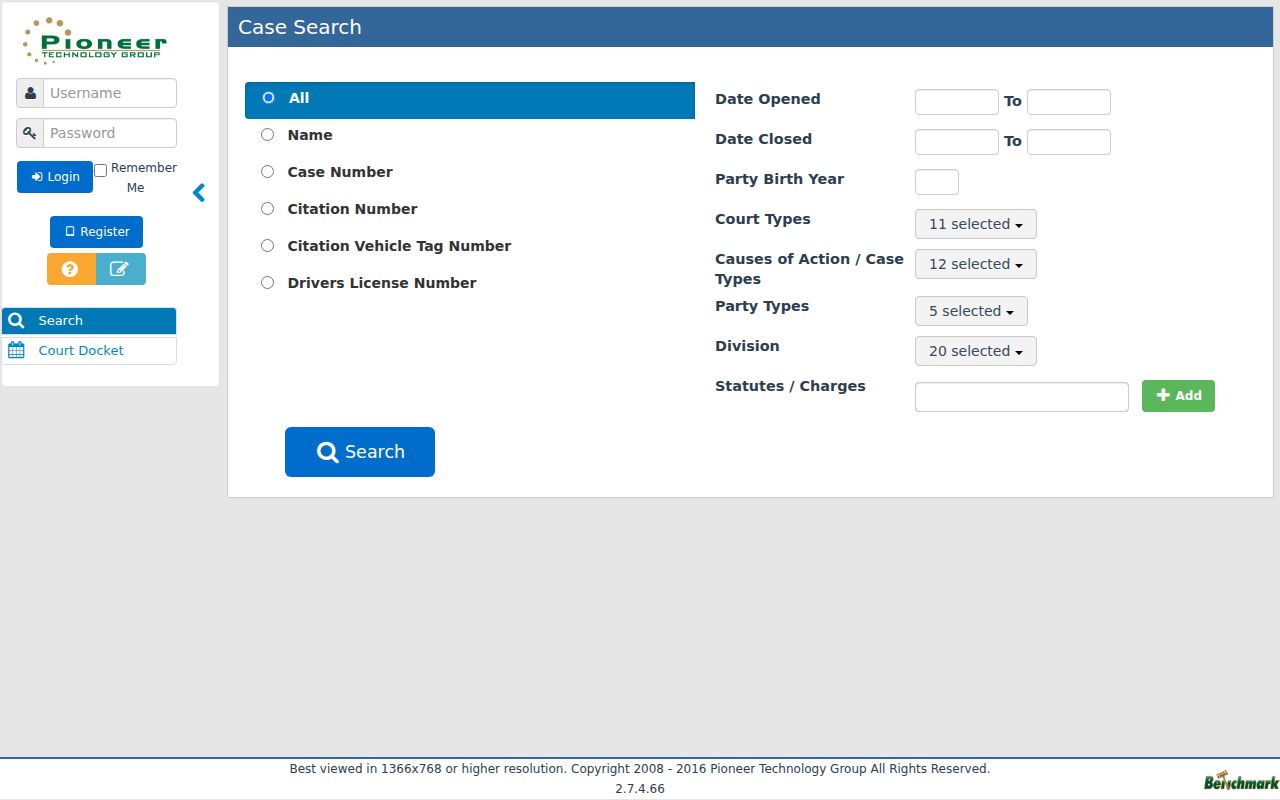
The form lists both current and legacy division labels. So record the selected court type with the result rather than trusting the word case alone.
What a DeKalb County Case Search Returns
Read a result row as a locator, not a verdict. The court, case number, case type, and division tell you where the matter belongs. Names and roles identify the parties. The same row can show counsel, judge, or solicitor that source shows. An event row may carry a date and time. Hearing type, courtroom, or a remote marker can appear too. A status word can describe posture. A blank or short label is not a verified disposition.
Calendar PDFs can beat a live row in one field. They can trail it in another. A DeKalb Superior arraignment calendar may list a courtroom, slot, charge, counsel, custody note, and judge. A State civil calendar may show a case range, parties, attorneys, cause label, deadline, and setting. Neither sample permits copying private names or identifiers. Keep them out of a public example.
| Case identity | Court, case number, case type, and division. State B traffic may use 2005 TR 000123. |
|---|---|
| People and roles | Party name, plaintiff, defendant, attorney, judge, or solicitor, depending on the court. |
| Event or setting | Date, time, hearing type, courtroom, judge, and a remote or in-person note when published. |
| Case posture | Charge, cause, filing, disposition, FTA, warrant, compliance, or another local status term. |
| Document access | Event, image, certified copy, or archive status, each with its own access conditions. |
DeKalb County Case Search Gaps
Two DeKalb courts sit outside the ordinary public docket path. The DeKalb Juvenile Court is one. Its site points readers to the DeKalb clerk and records office. It offers no public name-search docket. The court's e-filing page also reports the electronic filing system is down, and delinquency, dependency, CHINS, and juvenile traffic material carries statutory access limits on top of that.
The DeKalb Probate Court records route takes a similar turn. DeKalb estates, guardianships, marriage licenses, and weapons licenses all live there. But the court uses its own records office. Appointments replace a docket search anyone can run. So a blank result may just mean this. The public route does not reach the matter. When that happens, ask the responsible DeKalb clerk which inspection or appointment path applies.
Statewide vs County Case Search
Georgia Courts E-Access gives you a statewide starting point. It lists DeKalb State and Superior, then redirects to ResearchGA. An account is required. The statewide layer is only an index of participating courts, not one open docket search covering every Georgia case. DeKalb Odyssey is the more practical route for local court events once you know the court, though it still cannot replace a certified DeKalb clerk copy or a DeKalb city, Juvenile, Probate, or federal record.
| Statewide layer | DeKalb County layer |
|---|---|
| Georgia E-Access and ResearchGA | DeKalb Odyssey and court-linked local systems |
| Account and provider access required | Case events may be visible without an account |
| Useful when checking participating courts | Useful when the local court and case type are known |
| Not a complete statewide docket | Not a universal DeKalb docket for every court class |
Atlanta Benchmark Versus DeKalb County Case Search
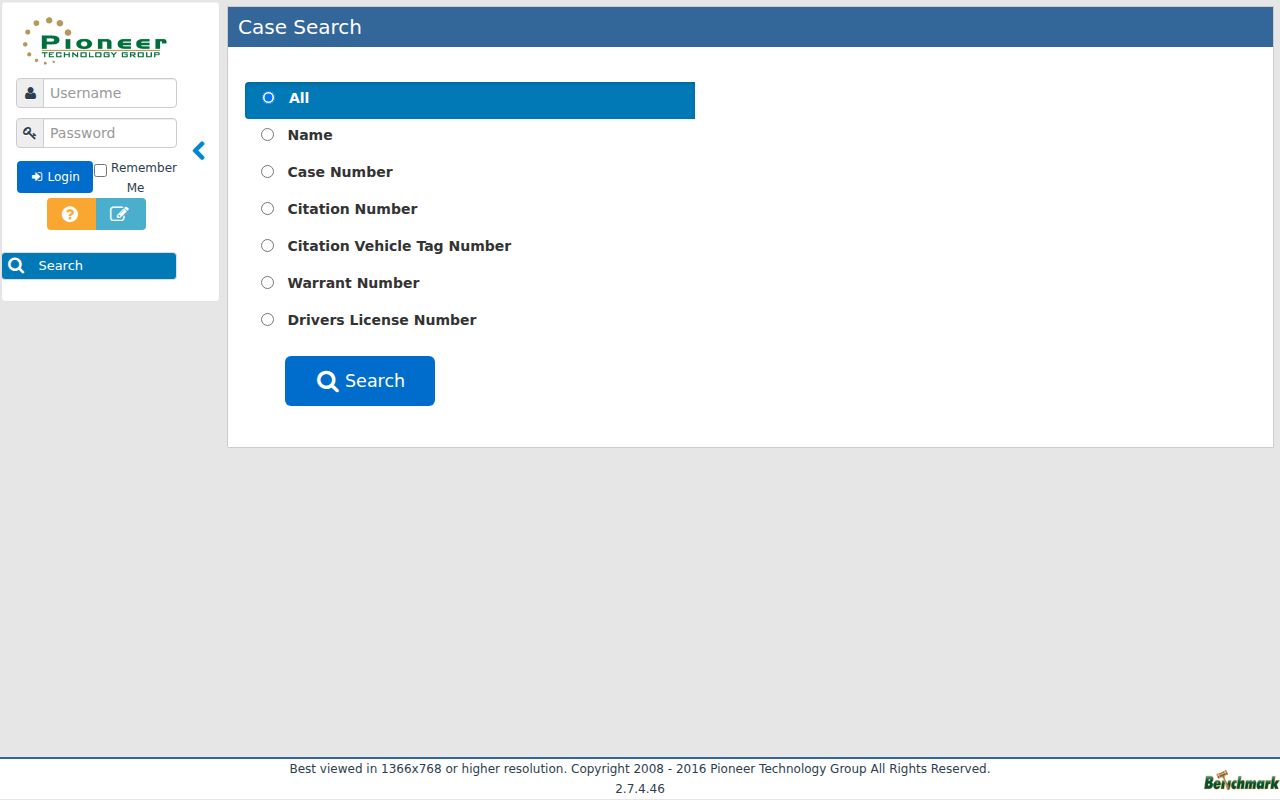
Atlanta Municipal Court runs its own Benchmark host. The platform family is the same one DeKalb State Division B uses. But the city's system stands apart. Its search form accepts a name, case number, citation number, citation vehicle tag number, warrant number, or driver's-license number. For fines, the city's nCourt payment route asks for a citation or case number. It processes the payment. Remember that this is a city tool. It is not the full DeKalb register of court events.
The Atlanta glossary marks a received citation with CONV when no courtroom and time have been assigned yet. In that situation the city sends people to the scheduled date or its monitors. Do not move an Atlanta result into the DeKalb State B host just because both search forms say Benchmark. The hosts are separate. And so are their case records.
The Atlanta Benchmark search page displays the city's own field set and its own host.
City custody controls the next step. An Atlanta municipal citation starts with Atlanta Municipal Court, never with a DeKalb County-wide case search.
DeKalb County Calendar Keyword Search
A stubborn case row sometimes needs a second DeKalb route. The DeKalb State Court calendar search is that tool. Its controls include Calendar, Division, Judge, keyword, Date Range, From Date, To Date, and Search. The keyword placeholder says it covers case, plaintiff, defendant, judge, courtroom, and hearing type fields. Options load dynamically. So treat the public wording as the full list rather than inventing entries.
Always compare a calendar hit against the case's own event setting. The DeKalb calendar page itself warns that listings can change or omit proceedings. A DeKalb Superior-linked Infax Daily Docket adds a same-day view with Party Name, Case Number, Floor, Courtroom, Hearing Time, and Judge columns. It stops short of the whole register of actions. When the two layers disagree, the latest DeKalb notice or clerk confirmation controls.
Access and Restricted Cases
Public access to DeKalb Superior records starts with Georgia Uniform Superior Court Rule 21. Lawful limits, court orders, privacy protections, and statutory confidentiality can still narrow what appears. Rule 21.6 allows redaction or restricted handling of protected identifiers. DeKalb Magistrate Court Rule 20 goes further. It limits displayed identifiers and puts redaction duties on parties and counsel. One caution matters here. A public DeKalb event is not automatically a public document image.
When a DeKalb docket search comes back empty, check the court, the case type, and the exact identifier first. Read the official DeKalb notice. If a DeKalb city citation has not posted yet, wait when that court says a delay exists. Then try the DeKalb case number, call the responsible clerk, or use the courthouse Public Access Terminal. A desktop browser with JavaScript and cookies enabled handles these dynamic forms best. No result does not mean no case. And a GBI criminal-history restriction under O.C.G.A. section 35-3-37 is not the same thing as a DeKalb court seal.
Federal PACER and DeKalb County Case Search
A federal case with a DeKalb connection belongs to the U.S. District Court for the Northern District of Georgia, Atlanta Division. DeKalb Odyssey, DeKalb Benchmark, and the DeKalb city portals do not hold it. PACER is the federal public-access route. The federal court's public terminals offer another way to inspect a docket. Fees are modest but real. PACER's published rate is $0.10 per page, capped at $3 for most documents. Quarterly charges of $30 or less are waived. Having the DeKalb federal case number in hand cuts needless search charges.
Registered filers work in CM/ECF, the federal filing and docket environment. Bankruptcy matters go to the Northern District of Georgia Bankruptcy Court instead. DeKalb State appeals travel a different road through the Superior Clerk's Appeals section. From there they go to the Georgia Court of Appeals or Supreme Court of Georgia. Keep the federal, state trial, municipal, and appellate records separate in your head whenever one case crosses systems.